
 By Prime Law Hub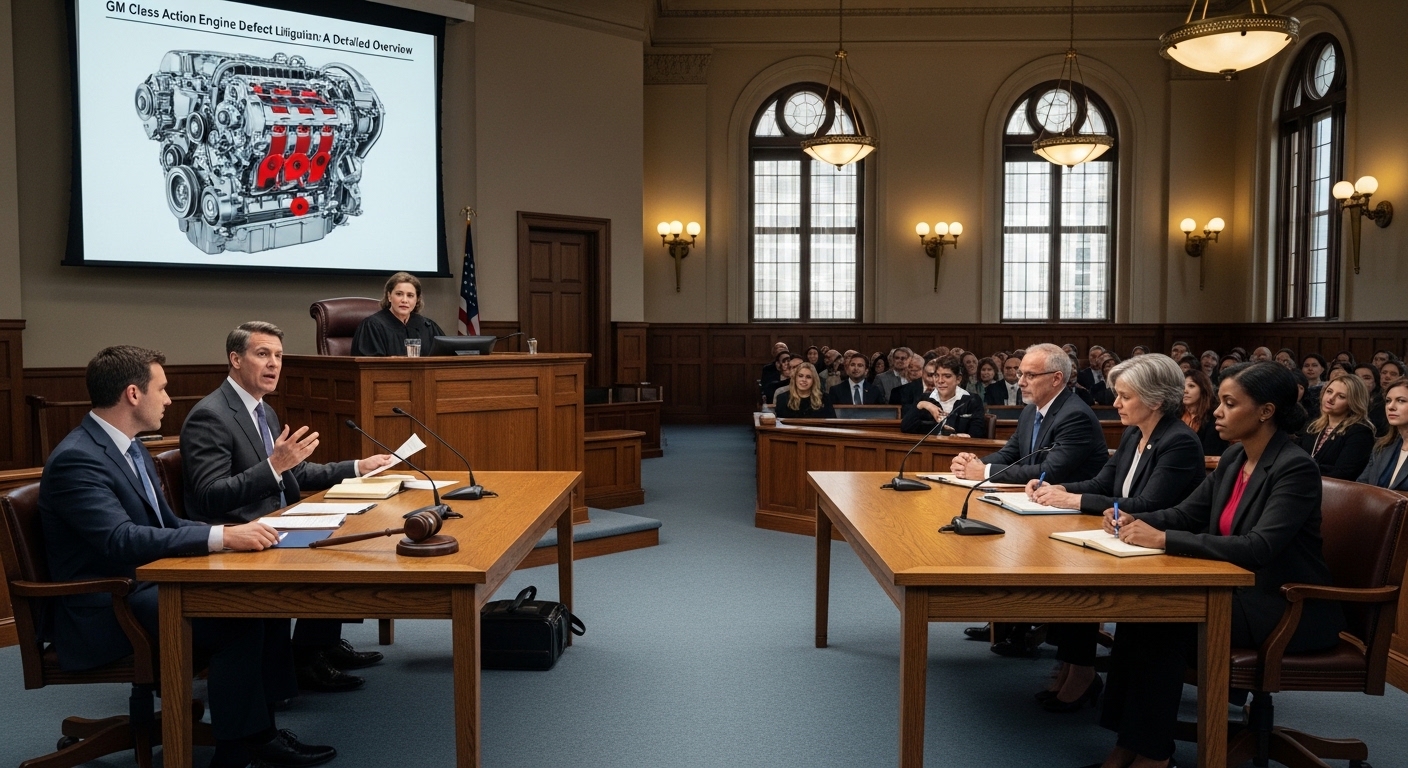
Key Points
- General Motors (GM) faces consolidated class action litigation over alleged defects in its 6.2L L87 V8 engines, primarily related to manufacturing issues in connecting rods and crankshafts that can cause sudden engine failure and loss of propulsion.
- A 2025 recall addressed the issue through oil viscosity changes and potential engine replacements, but ongoing reports of post-recall failures prompted a new NHTSA investigation in January 2026.
- As of February 2026, lawsuits are consolidated in the U.S. District Court for the Eastern District of Michigan, with proceedings in the early pleading stages; no settlement has been reached.
- Affected owners may experience safety risks, high repair costs, diminished vehicle value, and potential warranty coverage, though outcomes remain uncertain pending court and regulatory developments.
- Research and reports indicate the defect has affected hundreds of thousands of vehicles, but GM maintains it has provided remedies, and the company denies systemic wrongdoing in related statements.
Overview of the Issue: GM owners of certain trucks and SUVs equipped with the 6.2L L87 V8 engine have reported catastrophic engine failures, often without warning, leading to multiple class action lawsuits. These cases allege GM knew or should have known about the risks but failed to adequately disclose or remedy them, potentially breaching warranties and consumer protection laws.
Who Is Most Affected: Primarily owners and lessees of 2021–2024 model year Chevrolet Silverado 1500, GMC Sierra 1500, Cadillac Escalade, Chevrolet Tahoe/Suburban, and GMC Yukon/Yukon XL vehicles with the L87 engine (some earlier years in specific cases). The recall covered approximately 597,000–600,000 units.
Current Status: The NHTSA is investigating the effectiveness of GM’s recall remedy, and federal litigation is advancing through consolidated proceedings. No final rulings or settlements have occurred as of early February 2026.
Important Disclaimer: This information is for general educational purposes and does not constitute legal advice. Vehicle owners should check their VIN on official recall sites and consult qualified legal counsel or a mechanic for personalized guidance.
General Motors (GM) has encountered significant legal challenges related to alleged defects in its gasoline V8 engines, particularly the 6.2L L87 variant introduced in recent model years. As of February 2026, the most prominent ongoing litigation centers on claims that manufacturing defects in connecting rod and crankshaft components can lead to sudden engine failure, loss of propulsion, and heightened crash risks. These allegations have resulted in multiple class action lawsuits filed in 2025, now consolidated in federal court, alongside a parallel federal safety investigation by the National Highway Traffic Safety Administration (NHTSA).
This situation builds on GM’s history of engine-related consumer litigation, including prior settlements for older 5.3L V8 models involving excessive oil consumption and piston ring failures. However, the current wave of cases focuses on newer vehicles and raises distinct questions about recall adequacy, warranty obligations, and potential safety implications under federal motor vehicle safety standards.
Background and Legal Context
GM’s V8 engines, including those with Active Fuel Management (AFM) or Dynamic Fuel Management (DFM) systems, have faced scrutiny for years. Earlier class actions addressed issues such as excessive oil consumption in 2011–2014 models with LC9 5.3L engines, resulting in substantial settlements—such as a $150 million agreement approved in California federal court in late 2025 for affected owners in California, Idaho, and North Carolina.
The L87 6.2L V8, used in high-performance trucks and SUVs, has drawn more recent attention due to reports of catastrophic failures linked to bearing, rod, and crankshaft defects. Plaintiffs in the current cases allege that these issues stem from manufacturing flaws, including improper finishing and debris contamination, which can cause engine seizure even at low mileage. Some complaints describe failures occurring at highway speeds, with no prior warning indicators.
Under the Magnuson-Moss Warranty Act and state consumer protection statutes, plaintiffs contend that GM breached express and implied warranties by selling vehicles with latent defects and failing to provide effective remedies. The cases invoke principles of strict product liability and fraudulent concealment, common in automotive defect litigation where manufacturers are accused of prioritizing sales over timely disclosures.
Key Legal Issues Explained
The core allegations involve:
- Design and Manufacturing Defects: Improper crankshaft finishing and residual machining debris contributing to bearing failure.
- Sudden Failure Risks: Engines seizing without diagnostic trouble codes or audible warnings, potentially causing loss of power during operation.
- Recall Remedy Adequacy: GM’s 2025 recall (N252494001/25V-274) primarily involved switching from 0W-20 to 0W-40 oil viscosity to enhance lubrication, along with new filters and caps. Critics argue this interim measure does not address root causes and may reduce fuel efficiency or performance.
- Economic and Safety Harm: Reduced resale value, out-of-pocket repair costs (engine replacements can exceed $10,000), and increased accident risk.
These claims proceed under federal diversity jurisdiction and state law, with plaintiffs seeking certification of nationwide or multi-state classes. Courts evaluate commonality of issues, typicality of claims, and adequacy of representation under Rule 23 of the Federal Rules of Civil Procedure.
Latest Developments and Case Status
In April 2025, GM issued Recall 25V-274 for approximately 597,000 vehicles, acknowledging potential connecting rod/crankshaft defects leading to engine damage.
Post-recall complaints persisted, prompting NHTSA to open Recall Query RQ26001 on January 16, 2026, after receiving 36 reports of failures following the prescribed remedy. This investigation examines whether the fix adequately mitigates risks.
On the litigation front, at least a dozen lawsuits filed in 2025 were consolidated in the U.S. District Court for the Eastern District of Michigan (lead case involving Rittereiser et al., represented by Hagens Berman and co-counsel). Interim class counsel was appointed in November 2025. A consolidated complaint was due January 27, 2026, with GM’s response anticipated by March 30, 2026. No class certification hearing or settlement has been reported as of early February 2026.
Who Is Affected and Potential Impact
The primary affected population includes owners and lessees of the following vehicles equipped with the L87 6.2L V8:
| Model | Model Years | Approximate Units (Recall Scope) |
|---|---|---|
| Chevrolet Silverado 1500 | 2019–2024 | Significant portion |
| GMC Sierra 1500 | 2019–2024 | Significant portion |
| Cadillac Escalade/ESV | 2021–2024 | Included |
| Chevrolet Tahoe/Suburban | 2021–2024 | Included |
| GMC Yukon/Yukon XL | 2021–2024 | Included |
Owners may face:
- Extended warranty coverage (up to 150,000 miles on certain parts in some cases).
- Free or subsidized repairs under recall.
- Potential compensation if a settlement is reached.
- Resale challenges due to defect history.
GM has provided courtesy transportation and parts support, though some reports indicate delays in availability.
What This Means Going Forward
The outcome could influence automotive industry standards for engine durability, recall effectiveness, and disclosure obligations. A certified class could lead to monetary relief, extended warranties, or injunctive measures requiring further engineering changes. The NHTSA probe may result in recall expansion or penalties if remedies are deemed inadequate.
Owners should monitor NHTSA.gov for recall updates, check VIN status, and track court dockets via PACER for Michigan Eastern District filings. Industry observers note that persistent failures could pressure GM toward broader resolutions, consistent with past automotive defect resolutions.
Frequently Asked Questions
Which GM vehicles are involved in the current class action engine defect cases?
Primarily 2019–2024 models with the 6.2L L87 V8, including Chevrolet Silverado 1500, GMC Sierra 1500, Cadillac Escalade, Chevrolet Tahoe/Suburban, and GMC Yukon/Yukon XL.
What is the alleged defect in the L87 engine?
Manufacturing issues with connecting rods and crankshafts that can cause bearing failure, engine seizure, and sudden power loss.
Has GM issued a recall, and what does it involve?
Yes, Recall 25V-274 (April 2025) requires an oil viscosity change to 0W-40 and related service; some vehicles may require engine replacement.
Is the recall effective, and are there ongoing issues?
NHTSA is investigating post-recall failures under RQ26001 (opened January 2026), based on 36 complaints.
How can owners check if they are affected?
Enter your VIN on NHTSA.gov/recalls or contact a GM dealer.
What should owners do next?
Document any issues, retain repair records, and consult legal counsel if considering participation in litigation.
Conclusion
The GM class action engine defect litigation underscores ongoing tensions between automotive innovation, manufacturing quality, and consumer safety protections. While GM has implemented remedies and denies liability in many instances, the persistence of complaints and regulatory scrutiny highlights the importance of transparent defect management. Affected owners are encouraged to stay informed through official channels and seek professional advice as developments unfold.
You May Also Like: Is Tesis Labs LLC Legit? A Practical Buyer’s Guide