
 By Prime Law Hub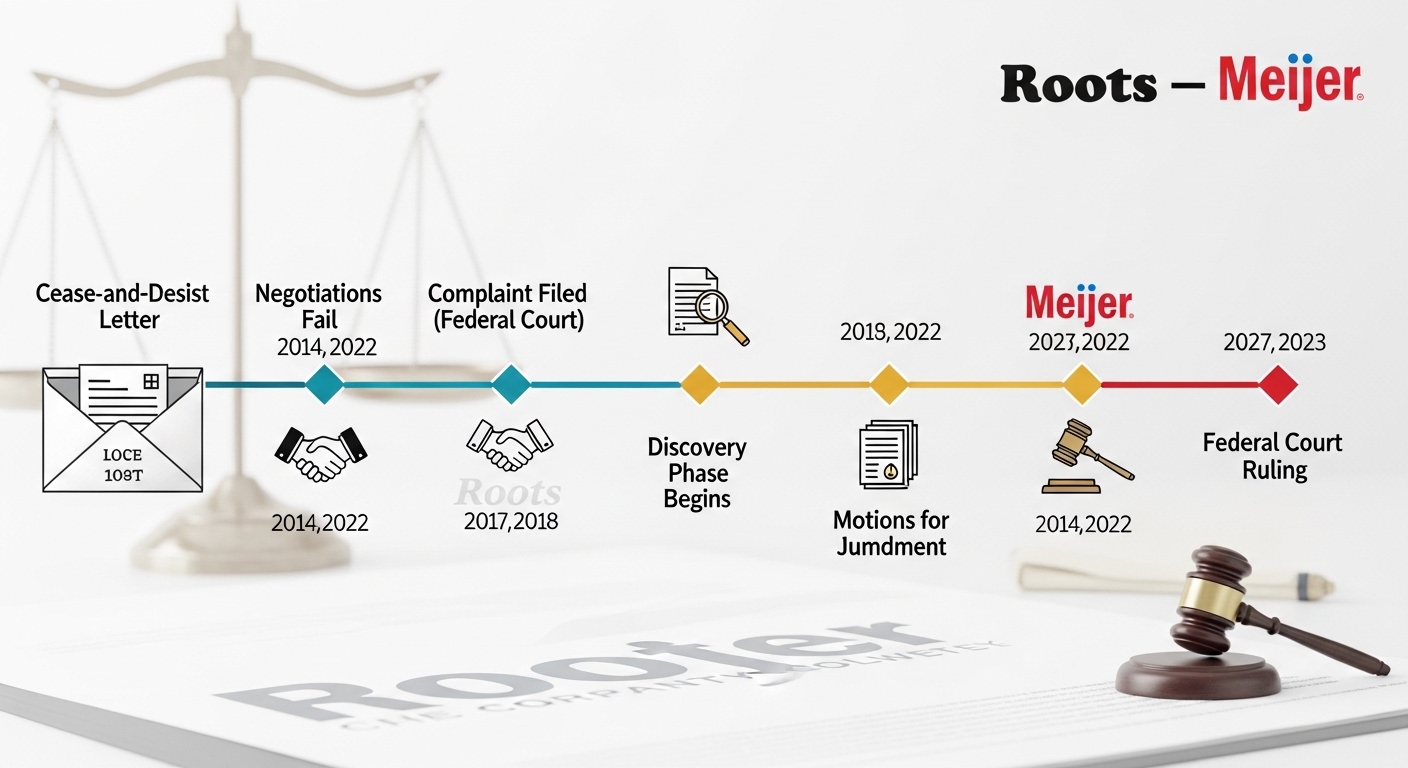
Introduction
The trademark dispute between Roots Corporation, a Canadian apparel retailer, and Meijer, Inc., a Michigan-based supermarket chain, highlights the challenges businesses face in protecting brand identities in competitive markets. Initiated in 2025, this case involved allegations of trademark infringement related to Meijer’s planned children’s clothing line under the mark “ROOTS & THREADS.” The dispute progressed from a U.S. Patent and Trademark Office (USPTO) rejection and a cease-and-desist letter to a federal lawsuit, ultimately resolving through voluntary dismissal. This roots meijer trademark dispute underscores the importance of trademark diligence for companies expanding product lines, particularly in the apparel sector where consumer confusion can erode established brand value. It affects retailers, consumers seeking authentic products, and legal professionals tracking intellectual property enforcement.
Background & Legal Context
Roots Corporation, founded in 1973 in Toronto, Canada, has built a global reputation for casual apparel, leather goods, and accessories, often featuring its iconic beaver logo. The company has operated in the United States since the 1970s, registering multiple trademarks for “ROOTS” with the USPTO under various classes, including clothing and bags. These registrations grant Roots exclusive rights to use the mark in commerce, protecting against unauthorized uses that could cause consumer confusion under the Lanham Act (15 U.S.C. § 1051 et seq.), the primary federal statute governing trademarks in the U.S.
Meijer, Inc., a family-owned retailer with over 500 stores across the Midwest, has a history of private-label brands in groceries, home goods, and apparel. In October 2024, Meijer filed a trademark application with the USPTO for “ROOTS & THREADS” (Serial No. 98816503), intending to cover children’s clothing, bags, and related items for a back-to-school launch in 2025. This application triggered scrutiny, as trademark examination involves assessing potential conflicts with existing registrations.
Trademark law requires applicants to demonstrate that their mark is distinctive and not likely to confuse consumers with prior marks. The USPTO examining attorney evaluates factors such as the similarity of marks, goods, and trade channels, drawing from precedents like In re E. I. du Pont de Nemours & Co. (476 F.2d 1357, CCPA 1973), which outlines the “DuPont factors” for likelihood of confusion. In this context, Roots’ long-standing use and registration of “ROOTS” positioned it to oppose potentially infringing marks.
Key Legal Issues Explained
At the heart of the roots meijer trademark dispute was the allegation of trademark infringement under Section 32 of the Lanham Act (15 U.S.C. § 1114), which prohibits the use of a mark likely to cause confusion with a registered trademark. Roots argued that “ROOTS & THREADS” was confusingly similar to its “ROOTS” marks, as “ROOTS” dominated both, and “THREADS” was merely descriptive of apparel, adding little distinctiveness. Plainly put, if consumers might mistakenly believe Meijer’s products were affiliated with or endorsed by Roots, this could dilute Roots’ brand and harm its reputation for quality.
Unfair competition claims under Section 43(a) of the Lanham Act (15 U.S.C. § 1125(a)) were also raised, addressing false designations of origin that could mislead consumers. Roots sought injunctive relief—a court order to stop Meijer’s use of the mark—and damages, including any profits Meijer gained from the alleged infringement. In real-world terms, such disputes often arise when retailers develop private labels that echo established brands, leading to costly litigation if preemptive searches or oppositions are overlooked.
The USPTO’s role was pivotal: it issues office actions during examination, allowing applicants to respond or amend. A non-final rejection, as occurred here, is an initial refusal that can be overcome, but failure to respond leads to abandonment. This process illustrates how administrative proceedings at the USPTO can precede or influence federal court actions, as parties may use rejections as evidence in lawsuits.
Latest Developments or Case Status
The roots meijer trademark dispute unfolded as follows:
- October 2024: Meijer files trademark application for “ROOTS & THREADS.”
- May 8, 2025: USPTO issues a non-final office action rejecting Meijer’s application due to likelihood of confusion with Roots’ marks.
- Post-May 2025: Roots sends a cease-and-desist letter to Meijer, demanding abandonment of the mark and cessation of plans to use it. Meijer declines, continuing development for a 2025 launch.
- August 8, 2025: Roots files a complaint in the U.S. District Court for the Western District of Michigan (Case No. 1:25-cv-00912), alleging trademark infringement and unfair competition. The suit, assigned to Judge Robert J. Jonker, sought an injunction, damages, and abandonment of Meijer’s application.
- August 11, 2025: Summons issued; Roots reports the action to the USPTO.
- August 15, 2025: Meijer waives service, with an initial answer due October 14, 2025.
- August 22, 2025: Meijer’s trademark application is abandoned for non-response to the USPTO office action.
- October 14-16, 2025: Parties stipulate to extend Meijer’s response deadline to November 14, 2025; court approves.
- November 18, 2025: Court issues an order to show cause, requiring Roots to request default or explain delay.
- December 8, 2025: Roots files a notice of voluntary dismissal with prejudice.
- December 9, 2025: Court grants dismissal; case terminated. USPTO notified of determination.
As of February 2026, no further filings or appeals have been reported, suggesting a possible out-of-court settlement, though details remain undisclosed. Dismissal with prejudice prevents Roots from refiling the same claims.
Who Is Affected & Potential Impact
This dispute primarily impacts Roots and Meijer as businesses. Roots, with its expansion into the U.S. market, risked brand dilution if consumers associated lower-priced private-label items with its premium products. Meijer faced potential delays or rebranding costs for its children’s line, affecting supply chains and marketing for back-to-school sales.
Consumers could be affected by confusion over product origins, potentially leading to purchases of items not meeting expected quality standards. In broader terms, retailers developing private labels must navigate trademark risks, as seen in similar cases involving major chains. The apparel industry, valued at billions, sees frequent disputes; successful enforcement like this may encourage more vigilant monitoring by brand owners.
Possible outcomes included an injunction halting sales or monetary damages, but the dismissal likely mitigated these through negotiation. For institutions, this case reinforces the need for thorough trademark searches before launches, aligning with guidance from the American Bar Association’s Intellectual Property Section.
What This Means Going Forward
The roots meijer trademark dispute illustrates the Lanham Act’s role in safeguarding trademarks amid retail innovation. It signals to businesses the value of early conflict resolution, such as through cease-and-desist negotiations, to avoid escalation to federal court, where proceedings can last months and incur significant expenses.
In the apparel sector, this may prompt increased scrutiny of private-label branding, especially for marks incorporating common words like “roots” that could overlap with established brands. Readers should monitor USPTO databases for similar applications and court dockets for precedents. For ongoing legal developments, consulting resources like the Federal Judiciary’s website or bar association updates is advisable.
This article is for informational purposes only and does not constitute legal advice. Individuals or businesses facing similar issues should consult qualified legal counsel.
Frequently Asked Questions
What triggered the roots meijer trademark dispute?
The dispute began when Meijer applied for the “ROOTS & THREADS” trademark in October 2024, leading to a USPTO rejection in May 2025 for likelihood of confusion with Roots’ marks.
Did Roots send a cease-and-desist letter to Meijer?
Yes, following the USPTO’s non-final rejection on May 8, 2025, Roots sent a cease-and-desist letter demanding Meijer abandon the mark, but Meijer proceeded with plans.
What was the outcome of the federal lawsuit?
The case, filed August 8, 2025, was voluntarily dismissed with prejudice by Roots on December 9, 2025, likely indicating a settlement.
How does trademark infringement work under U.S. law?
Infringement occurs when a mark is likely to confuse consumers about the source of goods, evaluated under the Lanham Act and factors like mark similarity and market overlap.
What happened to Meijer’s trademark application?
It was abandoned on August 22, 2025, due to non-response to the USPTO’s office action.
Can Roots refile the lawsuit?
No, dismissal with prejudice bars refiling the same claims in the same court.
Conclusion
The roots meijer trademark dispute, from USPTO rejection and cease-and-desist to federal court dismissal, exemplifies the procedural safeguards in U.S. trademark law. It emphasizes proactive brand protection and the potential for amicable resolutions. Staying informed on such cases helps consumers and professionals understand evolving legal landscapes in retail and intellectual property.
You May Also Like: Lucas Lagoons Lawsuit: 5 Essential Lessons for High-End Pool Owners