
 By Prime Law Hub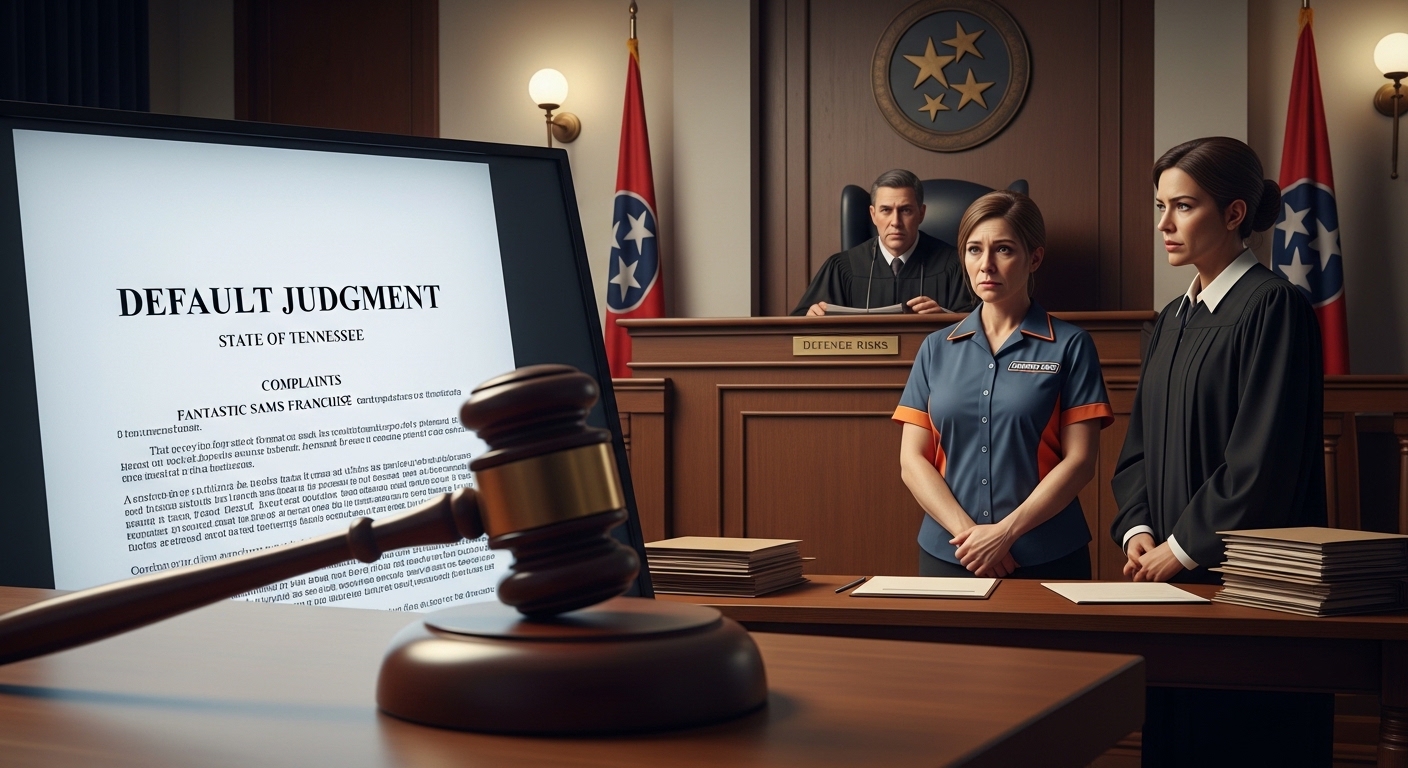
A recent federal court ruling against a Fantastic Sams franchisee underscores the legal consequences of post-termination non-compliance, revealing broader contractual challenges within the salon franchise system.
Introduction
When franchise relationships break down, the legal fallout can be swift and severe. A December 2024 decision by the U.S. District Court for the Western District of Tennessee illustrates this reality with striking clarity. In Fantastic Sams Franchise Corporation v. DonMarcos, LLC, the court granted the franchisor a default judgment and permanent injunction against a former franchisee who continued operating under the brand without authorization.
This case represents more than a single dispute—it highlights recurring legal tensions embedded in the Fantastic Sams franchise model. For current and prospective franchisees, understanding these dynamics is essential. For consumers, franchisee complaints often translate directly into service inconsistencies, wait time frustrations, and quality control issues that have become frequent subjects of customer grievances.
This article examines the legal landscape surrounding Fantastic Sams franchise complaints, analyzing the DonMarcos case as a focal point and exploring the broader implications for franchisees, customers, and the brand itself.
Background & Legal Context
The Fantastic Sams Franchise System
Founded in 1974, Fantastic Sams has grown into a prominent North American hair salon franchise, operating hundreds of locations across the United States and Canada. The brand markets itself as an affordable, family-oriented alternative in the competitive salon industry, offering haircuts, coloring services, and styling treatments.
Like most franchise systems, Fantastic Sams operates under a model where individual franchisees purchase the right to use the brand’s trademarks, proprietary systems, and operational methods. In exchange, franchisees pay initial fees—typically ranging from $150,000 to $300,000 to establish a location—along with ongoing royalties and advertising contributions.
The Legal Framework of Franchise Agreements
Franchise agreements are complex contractual documents that impose significant obligations on both parties. For franchisees, common requirements include:
- Royalty and advertising fund payments: Weekly or monthly fees calculated as a percentage of gross sales
- Operational standards: Mandatory adherence to brand-approved products, services, and procedures
- Post-termination obligations: Non-compete covenants and requirements to cease using brand trademarks after termination
When franchisees fail to meet these obligations, franchisors typically have contractual rights to terminate the agreement and pursue legal remedies. State franchise laws and federal arbitration rules add additional layers of complexity to these disputes.
Key Legal Issues Explained
Post-Termination Obligations: The Core of Franchise Disputes
One of the most contentious areas in franchise law involves what happens after a franchise agreement ends. Standard franchise agreements typically require terminated franchisees to:
- Immediately cease using the franchisor’s trademarks and trade dress
- Remove all brand signage and marketing materials
- Comply with non-compete covenants restricting their ability to operate similar businesses nearby
The DonMarcos case exemplifies the consequences of ignoring these obligations. According to court records, the franchisee continued operating as a Fantastic Sams salon—retaining signage and performing brand-approved treatments—even after the franchise agreement was terminated and arbitration proceedings had concluded.
The Arbitration-to-Court Pathway
Franchise agreements frequently contain mandatory arbitration clauses, requiring disputes to be resolved through private arbitration rather than public court proceedings. However, when a party fails to comply with an arbitration award, the prevailing party can seek judicial confirmation.
In DonMarcos, the arbitrator had already awarded Fantastic Sams $70,309.74 in damages and ordered compliance with post-termination obligations. When the franchisee failed to pay or comply, the franchisor filed suit in federal court, successfully obtaining a default judgment when the franchisee failed to respond.
Default Judgment and Permanent Injunction
A default judgment is entered when a defendant fails to respond to a lawsuit. It effectively grants the plaintiff everything requested in the complaint without a trial on the merits. In this case, the court also issued a permanent injunction—a court order requiring the franchisee to take specific actions or refrain from certain activities.
The injunction likely prohibits the former franchisee from continuing to operate under the Fantastic Sams brand, using its trademarks, or competing within prohibited geographic boundaries.
Latest Developments & Case Status
Fantastic Sams Franchise Corp. v. DonMarcos, LLC
Court: U.S. District Court for the Western District of Tennessee
Civil Action No.: 2:24-cv-2867
Decision Date: December 17, 2024
Procedural History:
- Franchise Agreement: DonMarcos LLC entered into a renewal franchise agreement with Fantastic Sams Franchise Corporation, agreeing to pay weekly royalty and marketing fees and abide by non-compete covenants.
- Payment Default: During the agreement term, the franchisee stopped fulfilling monthly payment obligations, including royalties, national advertising fund contributions, and regional advertising fund payments.
- Termination & Arbitration: The franchisor terminated the agreement and initiated arbitration. The franchisee did not appear at the arbitration hearing but continued operating as a Fantastic Sams salon.
- Arbitration Award: The arbitrator ordered the franchisee to pay $70,309.74 in damages and comply with the post-termination non-competition covenant.
- Judicial Confirmation: Fantastic Sams confirmed the arbitration award in court. The franchisee did not respond, pay damages, or comply with the non-compete provision.
- Federal Lawsuit: The franchisor sued for trademark infringement and other claims. The franchisee failed to respond, leading to a default entry and subsequent default judgment with permanent injunction.
What This Means for Ongoing Cases
The DonMarcos decision is significant not because it breaks new legal ground, but because it demonstrates the speed and finality with which franchisors can enforce post-termination obligations when franchisees fail to engage in the legal process. The case serves as both a cautionary tale for franchisees and a potential template for franchisors seeking to enforce similar provisions.
Who Is Affected & Potential Impact
Franchisees
For existing and prospective Fantastic Sams franchisees, the DonMarcos case highlights several critical risks:
- Financial exposure: Franchisees who fall behind on payments face not only termination but also liability for damages, attorney fees, and arbitration costs. The $70,309.74 award in DonMarcos represents a significant financial blow.
- Post-termination restrictions: Non-compete covenants can prevent former franchisees from operating competing salons in the same geographic area for specified periods.
- Default risks: Failing to respond to arbitration or court proceedings results in automatic judgments that can include injunctive relief and monetary damages.
Customers
Customer complaints about Fantastic Sams frequently center on service quality and wait times. These operational issues often trace back to underlying franchisee challenges. When franchisees struggle financially—as indicated by payment defaults—service quality may suffer. When disputes lead to abrupt closures or ownership changes, customers experience disruptions and inconsistent experiences.
Common customer grievances include:
- Appointment times not being honored
- Stylist inexperience or inconsistent service quality
- Frustration with wait times and scheduling systems
The Franchisor
For Fantastic Sams corporate, aggressive enforcement of franchise agreements serves dual purposes: protecting brand integrity and maintaining revenue streams. The DonMarcos decision reinforces the franchisor’s ability to control terminated franchisees and prevent unauthorized brand use.
However, aggressive enforcement also carries risks. Franchisee dissatisfaction can lead to negative publicity, operational disruptions, and—in some cases—countersuits alleging franchisor overreach.
What This Means Going Forward
Legal Significance
The DonMarcos case underscores several principles that franchise lawyers and participants should note:
- Arbitration awards are enforceable through federal court: Franchisors can efficiently convert arbitration victories into judicially enforceable judgments and injunctions.
- Default judgments are powerful tools: When franchisees fail to respond to litigation, franchisors can obtain comprehensive relief without proving their case on the merits.
- Post-termination compliance is mandatory: Franchisees cannot simply ignore non-compete covenants or trademark restrictions after termination without facing legal consequences.
Industry Impact
The salon franchise industry faces ongoing tensions between franchisor control and franchisee autonomy. Disputes over royalty payments, advertising fund contributions, and operational restrictions are common. The Fantastic Sams system, with its long history and extensive North American presence, is no exception.
Potential franchisees should carefully review Franchise Disclosure Documents (FDDs) and consider consulting franchise counsel before signing agreements. Understanding termination provisions, post-termination obligations, and dispute resolution procedures is essential to managing risk.
What to Monitor
- Additional lawsuits: The DonMarcos decision may encourage other franchisors to pursue similar enforcement actions against non-compliant franchisees.
- Franchisee advocacy: In response to aggressive enforcement, franchisee associations may push for legislative protections or negotiate more balanced contract terms.
- Operational changes: Franchisors may revise training and support programs to address root causes of franchisee non-compliance.
Frequently Asked Questions
What is the typical investment for a Fantastic Sams franchise?
The initial investment to open a Fantastic Sams franchise typically ranges from $150,000 to $300,000, covering equipment, inventory, leasehold improvements, and initial marketing. Ongoing fees include royalties of approximately 5-6% of gross sales and advertising contributions of about 2%.
What legal claims can a franchisor bring against a terminated franchisee?
Franchisors commonly assert claims for trademark infringement, breach of contract, and violation of non-compete covenants. In the DonMarcos case, Fantastic Sams successfully obtained a default judgment and permanent injunction against a former franchisee who continued operating under the brand.
What happens if a franchisee stops paying royalties?
Non-payment of royalties typically constitutes a material breach of the franchise agreement, triggering termination rights. After termination, franchisees must cease using brand trademarks and may face legal action for damages and injunctive relief, as occurred in DonMarcos.
How can franchisees protect themselves from legal disputes?
Franchisees should consult experienced franchise counsel before signing agreements, maintain accurate financial records, communicate proactively with franchisors about payment issues, and—if disputes arise—respond promptly to arbitration or court proceedings. Ignoring legal actions, as in DonMarcos, leads to default judgments.
Are non-compete covenants enforceable in franchise agreements?
Non-compete covenants in franchise agreements are generally enforceable if they are reasonable in geographic scope and duration. However, enforceability varies by state law. The DonMarcos case included a post-termination non-competition covenant that the court upheld.
What recourse do customers have for salon service complaints?
Customers experiencing service issues at Fantastic Sams salons can raise complaints directly with salon management or through corporate customer service channels. For disputes involving prepaid services or gift cards, consumers may have additional protections under state consumer protection laws.
Conclusion
The December 2024 default judgment against DonMarcos LLC represents a significant legal victory for Fantastic Sams Franchise Corporation, but it also illuminates the challenges embedded in the franchise model. For franchisees, the case underscores the high stakes of non-compliance: substantial monetary damages, permanent injunctions, and the loss of business investments. For customers, the ripple effects of franchisee distress often manifest as inconsistent service quality and operational frustrations.
As the Fantastic Sams franchise system continues to evolve—with private equity ownership since 2019 and leadership focused on revitalizing the brand—the balance between corporate control and franchisee autonomy remains delicate. Prospective franchisees should approach investment decisions with eyes wide open, conducting thorough due diligence and seeking qualified legal counsel. Current franchisees should prioritize compliance with contractual obligations to avoid the costly legal consequences illustrated by the DonMarcos case.
Staying informed about franchise disputes, regulatory developments, and court decisions is essential for anyone involved in or considering entry into the salon franchise industry.
You May Also Like: The Cautionary Tale of Kenton Corporation: Regulatory Red Flags and Legal Lessons for Entrepreneurs